About six years into my role with the Iowa Online Nurse Residency Program, the COVID-19 pandemic came along and, like many others, prompted me to slow down and rethink some of the things I had been doing. For me, that meant taking a closer look at nurse residency.
As I reviewed our program outcomes, I noticed that we were seeing exactly the kinds of results we hoped for. Nurses were gaining confidence. They were developing competence. We saw growth in communication skills, leadership development, and many of the areas nurse residency programs are designed to support. But there was one outcome we weren't seeing as consistently as we would have liked: retention. While nurses were growing as professionals, those improvements weren't always translating into the workforce outcomes we expected.
At first, I wondered if it was simply the pandemic. Certainly, that could explain some of it. Then I questioned whether our program needed to be more effective. There may have been some truth to that as well. But what really didn't make sense to me was this: two nurses could go through the exact same program and have completely different experiences. One would describe the program as transformational and rave about how much it helped them. The other might complete the same program and walk away with a very different perspective. So I started asking myself why.
As I began thinking about what we needed to do differently, I found myself returning to what I believe is one of the most important questions we can ask about any program: Why does this exist? What do we want it to do for the nurse? For the organization? For the patients we serve?
When I thought back to conversations I had with healthcare organizations over the years about why they were interested in bringing a nurse residency program to their organization, the conversation seemed to come back to the same word: retention. That's what everyone wanted. But as I slowed down, I realized something important. Retention might be the outcome we're all after, but it isn't the whole story. We surely wanted more than just warm bodies filling positions. We wanted nurses who were invested in their work, connected to their organizations, and contributing in meaningful ways.
I also realized there was a flaw in how organizations were thinking about nurse residency programs. You don't implement a nurse residency program and suddenly all of your retention challenges disappear. Yes, nurse residency programs can support and improve retention among first-year nurses. But retention is influenced by countless factors, many of which extend well beyond any single program.
As we circled back to those questions and intentionally shifted our focus away from retention, I began to realize what we were really trying to achieve. We wanted nurses who were competent and capable of providing safe patient care. We wanted nurses who could think critically, contribute to coordinated care delivery, and positively impact patient outcomes. We wanted confident nurses. But when I really thought about it, what we wanted most were nurses who felt invested in their work. Nurses who could recognize challenges, contribute to solutions, and see themselves as part of something bigger than simply completing tasks. We didn't just want retained employees. We wanted engaged employees. That distinction changed my entire way of thinking about nurse residency. Because maybe retention isn't the thing we should be designing for. Maybe retention is what happens when people are engaged. And what would happen if we reimagined our program through that lens? What if we not only ensured the program included the experiences and supports necessary to foster engagement, but also helped our partner organizations better understand the role they play in creating the conditions to cultivate engagement long after a nurse residency program ends?
"Maybe retention isn't the thing we should be designing for. Maybe retention is what happens when people are engaged."
So I started exploring the concept of engagement through the lens of years of nurse residency program delivery and what I had observed firsthand in practice. Then I turned to the literature. Much of what I was seeing in practice was reinforced by the research. Eventually, I started sketching ideas in a notebook. Those early sketches ultimately evolved into what became the Organizational Framework for Nurse Engagement.
The framework identifies key components that help nurses become engaged, but it also acknowledges something equally important: engagement isn't solely an individual responsibility. How nurses experience their work is influenced by the environment around them. That is why the framework goes beyond individual factors to include foundational enablers and organizational assets that help create the conditions where engagement can develop and thrive.
That brings us to this month's episode of the Beyond Nurse Residency podcast. I sat down with Hannah Hayes, co-author of the manuscript we published about this framework, to talk about how this all came to be, what we learned along the way, why we believe engagement should be the target, and what healthcare organizations can do differently if they want to build a more engaged nursing workforce.
For those of you who have been listening throughout Season 3, much of this framework will probably feel familiar. That is because many of the conversations we've had this year were intentionally designed to take a deeper look at the different components of engagement. We started the season by introducing the concept of engagement. From there, each episode explored a different component, including healthy work environments, approaches to competency validation, physical, psychological, and professional safety, and the role of belonging and esteem.
My hope is that both the manuscript and this season's podcast episodes encourage nurse leaders and nursing professional development practitioners to move beyond asking how to improve retention and instead begin asking a different question: What would happen if we focused on creating the conditions that cultivate engagement? Retention may be the outcome we're trying to achieve, but designing for engagement might just be the way we get there.
Listen to the episode with Hannah Hayes Building Nurse Engagement & Retention: An Organizational Framework
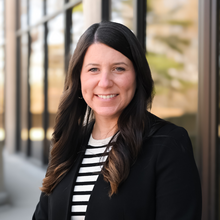
Nicole Weathers, DNP, RN, NPD-BC
Iowa Online Nurse Residency Program Director
[email protected]
Wanting a Program Overview? Need to schedule a meeting? Book time with Nicole
Get all the latest IONRP news. Join our mailing list! Subscribe